

YVY RIDING GUIDES
Is 90 Nm Torque Good on an E-Bike? What 85–90 Nm Feels Like
Get to know the power behind your ride.
Compare YVY e-bikes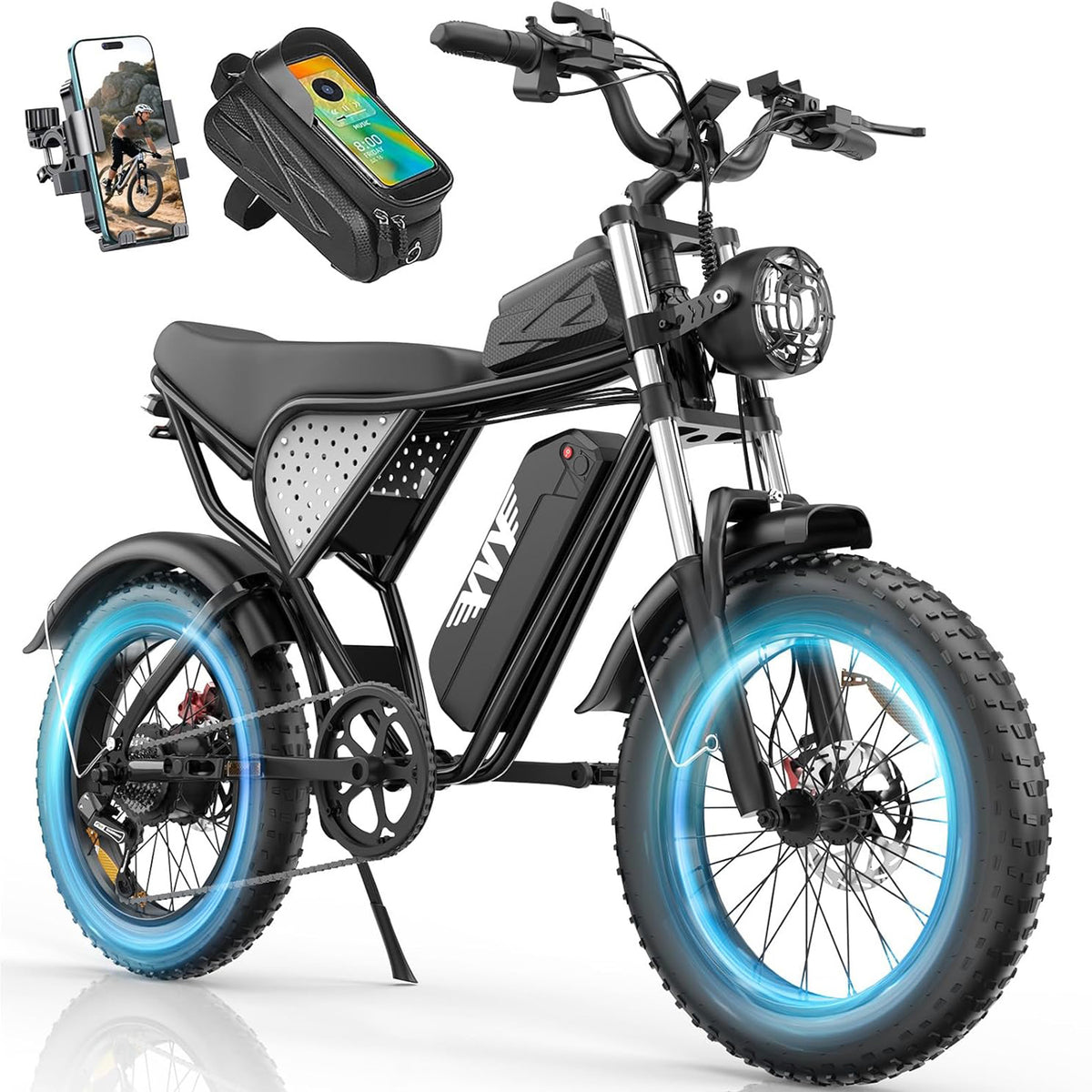
Updated: November 8, 2026
E-bike torque is the twisting force that decides how a motor feels when you leave a stop or hit a steep grade. Watt labels get the ads; Newton-meters decide whether the hub pulls cleanly at walking speed. On YVY’s verified climbing language, roughly 85 N·m on K20-class bikes and about 90 N·m on C22 / K20 25Ah-class machines describe strong fat-tire hill manners—useful numbers only when you also manage PAS, gearing, tire pressure, and heat on the way up.
What Does 85–90 Nm Mean on a Climb?
It means strong low-speed pulling force at the wheel.
Torque is turning force. High Newton-meters help the motor hold cadence on steep pitches without bogging, especially on 20-inch fat tires that carry extra rolling resistance. It is not the same as top speed, and it is not a Peak watt badge. A bike can advertise high Peak watts yet feel weak if gearing, tire pressure, or thermal limits intervene. Pair this page with e-bikes for hills and Peak versus continuous wattage.
Think of torque as the shove that gets a loaded bike moving from a light, and watts as how quickly you can keep doing work once you are rolling. Shoppers who only compare Peak stickers often miss that distinction until the first steep driveway.

How Is Torque Different from Watts?
Watts are power; torque is the shove you feel at low rpm.
Power (watts) relates to how quickly work gets done. Torque describes the rotational shove available to overcome gravity and soft ground. On a long freeway-style bike path you notice watts and class speed caps more. On a 10–15% neighborhood climb you notice torque, gear choice, and whether the motor overheats. Marketing that only shouts Peak watts without Newton-meters leaves the climb story incomplete.
The K20 product copy cites 85 N·m with its 750W-class motor language; treat that as model-specific verified text, not a claim for every bike in the lineup. When a page omits Newton-meters, do not invent them—judge climb manners from Peak wording, gearing, and rider reports of thermal behavior instead.
| Spec | What it answers | Climb relevance |
|---|---|---|
| Torque (N·m) | Low-speed pulling force | Steep starts, soft sand, loaded launches |
| Continuous-oriented power | Sustainable work rate | Long grades without fading |
| Peak watts | Short burst ceiling | Surges, not all-day heat |
| Class speed cap | Legal assist ceiling | Does not create hill torque |
Is 90 Nm “Enough” for Steep Hills?
For most adult fat-tire riders, yes—if you shift and manage heat.
Roughly 90 N·m class torque on bikes such as the C22 and K20 25Ah (per prior verified page language) is in the strong consumer fat-tire band. It will not replace picking a lower gear or pedaling. Extremely steep hike-a-bike grades, very heavy cargo, or sustained full-throttle climbs can still overheat a hub—see motor overheating causes.
Do not invent Newton-meters for the K20Pro; cite that page’s 3000W Peak and 52V 40Ah wording instead and judge climb feel from Peak literacy plus gearing. Battery watt-hours still decide whether you can repeat the climb all afternoon.

What Else Changes Climb Feel?
Tire pressure, PAS level, rider weight, and gear selection.
Underinflated fat tires climb like glue. High PAS on a steep pitch dumps heat into the hub. A too-hard gear forces the motor to lug. Drop PAS on long grades if the motor casing feels alarmingly hot, shift easier, and pedal smoothly. Dual suspension and 20×4.0 tires improve traction but do not create Newton-meters.
Compact riders who need fit first should look at the K16 (Peak 1500W on its page) before chasing torque numbers alone. A strong motor on a bike you cannot stand over safely is the wrong purchase. Also keep brakes ready for the descent—torque gets you up; rotors and pads get you down.
A practical climb test beats brochure reading. Pick a steep block you already ride, note starting PAS, gear, and whether the hub smells hot or cuts power at the top. Repeat once with lower PAS and an easier gear. If the second run feels dramatically better, you needed technique more than a higher Newton-meter sticker. If both runs bog despite sensible shifting, then prioritize models with verified climb torque and adequate watt-hours for repeats.
Cargo changes the math. A rear rack with groceries or a passenger-capable frame loading (where the product and local rules allow) multiplies demand at low speed. Confirm weight ratings on the product page and remember that torque helps launches while brakes and rotors must handle the heavier descent afterward.
How Should Shoppers Use Torque Numbers?
Treat them as one column in a hill checklist.
Verify torque only when the official page states it. Combine it with battery watt-hours for repeated climbs, brake quality for the descent, and class rules for the road home. Compare adult options inside the fat-tire collection and the lineup decision guide.
For PAS discipline that preserves both torque feel and battery, read PAS levels explained. A leftover-charge audit after your steepest weekly loop tells you whether you need more Newton-meters, more watt-hours, or simply better shifting habits.

Where to Verify Facts and Rules
Cross-check with CPSC battery safety education, PeopleForBikes, NHTSA bicycle safety, UL Standards and Engagement, and FAA PackSafe. Local statutes and posted trail rules always win over marketing labels.
FAQ
Is 90 Nm torque good on an e-bike?
Yes for most adult fat-tire climbing and loaded starts, provided you shift sensibly and avoid cooking the motor on endless full-throttle grades. It is a strong consumer figure, not a downhill-bike replacement.
Does higher Peak wattage guarantee higher torque?
No. Peak watts and Newton-meters measure different things. Always read both when the page publishes them, and never invent a torque number the page omits.
Why does my high-torque bike still struggle?
Soft tires, a hard gear, low battery voltage under load, excess cargo, or thermal limiting can all flatten climb feel. Check PSI, shift easier, and let the motor cool on long pitches.
Should short riders prioritize torque or fit?
Fit first. A strong motor you cannot stand over safely is the wrong buy. Solve standover with models like K16 or C22, then confirm climb specs.
Conclusion
Use 85–90 N·m as evidence of strong fat-tire climb manners, then validate PAS habits, gearing, and heat control on your hills. Compare climb-ready models in the fat-tire collection.
Explore more in Motors & Ride Controls.
Get to know the power behind your ride.
Compare YVY e-bikes Motors & Ride Controls